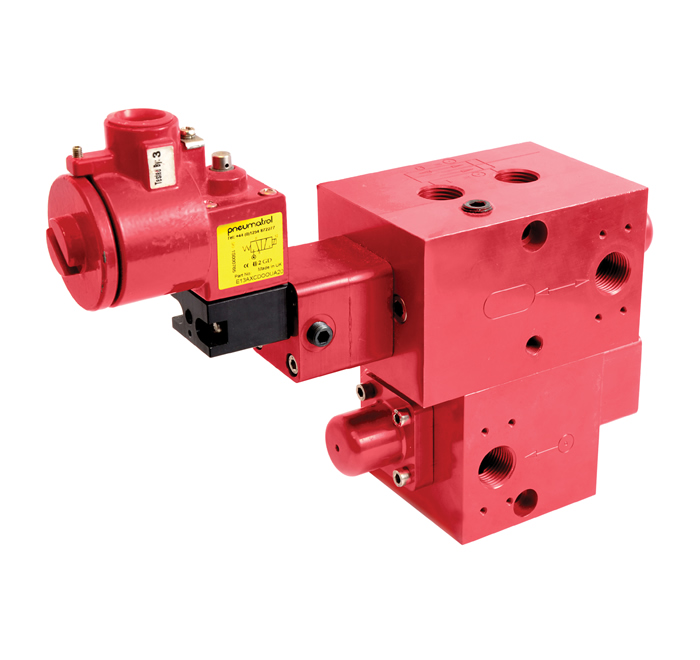
2oo3 and 3oo4 Voting Systems for Safety-Critical Process Applications
Product Overview
The ROSS Pneumatrol voting system architecture is designed to provide enhanced reliability and fault tolerance within safety-related control systems.
Using proven voting logic principles, the system can be configured as:
- 2oo3 (Two Out of Three) Voting
- 3oo4 (Three Out of Four) Voting
These architectures can be applied to both energising and de-energising control signals, helping improve both system safety and operational availability.
Manufacturer: ROSS Pneumatrol
Product Type: Safety Voting System
Voting Architectures: 2oo3 and 3oo4
Application: Safety Instrumented Systems (SIS)
What is a Voting System?
Voting systems are commonly used in safety-critical applications where multiple independent signals are monitored before a control action is initiated.
The voting logic ensures that a single device failure, faulty sensor or false signal does not unnecessarily activate or inhibit a safety function.
This approach helps improve:
- Functional safety performance
- System availability
- Fault tolerance
- Process uptime
- Reliability of shutdown functions
2oo3 (Two Out of Three) Voting
In a 2oo3 system:
- Three independent channels monitor a process condition.
- At least two channels must agree before a control action occurs.
- A single fault within one channel can be tolerated without compromising operation.
Benefits include:
- Reduced risk of nuisance trips
- Increased fault tolerance
- Improved process availability
- High integrity shutdown performance
3oo4 (Three Out of Four) Voting
In a 3oo4 system:
- Four independent channels monitor a process condition.
- At least three channels must agree before the system acts.
- Additional redundancy provides increased availability and fault tolerance.
Benefits include:
- Enhanced system reliability
- Greater resistance to spurious trips
- Increased operational continuity
- Suitable for high-availability process environments
Key Features
- Supports both energising and de-energising safety logic
- 2oo3 and 3oo4 architecture options
- Increased fault tolerance
- Reduced risk of nuisance shutdowns
- Improved process availability
- Designed for Safety Instrumented Systems (SIS)
- Suitable for critical actuator and valve control applications
- Engineered for demanding industrial environments
Applications
Typical applications include:
- Emergency Shutdown (ESD) systems
- Safety Instrumented Functions (SIF)
- HIPPS systems
- Process shutdown systems
- Critical valve control systems
- Actuated isolation valves
- Oil and gas facilities
- Petrochemical processing plants
- Power generation facilities
- Energy infrastructure
Product Benefits
Increased Safety Integrity
Multiple voting channels improve confidence that shutdown actions occur when genuinely required.
Reduced Spurious Trips
By requiring confirmation from multiple independent signals, unnecessary shutdowns can be significantly reduced.
Improved Plant Availability
Reduced nuisance trips help maintain production uptime while preserving safety performance.
Fault Tolerant Design
Voting systems are designed to continue operating safely even if individual channels experience faults or failures.
Suitable for Critical Applications
Ideal for systems where operational continuity and functional safety are equally important.
Industries Served
- Oil & Gas
- Petrochemical Processing
- Chemical Manufacturing
- Energy & Utilities
- Power Generation
- Hydrogen Facilities
- Process Industry
- Safety-Critical Automation Systems
Why Choose ROSS Pneumatrol?
ROSS Pneumatrol has extensive experience supplying engineered pneumatic and safety-related solutions for critical process applications worldwide. Our expertise in actuator control, shutdown systems and hazardous area automation enables us to support customers operating within some of the world's most demanding industrial environments.
Our voting system solutions help customers achieve improved safety performance, reduced downtime and enhanced operational reliability while supporting modern functional safety philosophies.
Important Notes
- Voting architecture should be selected based on the required Safety Integrity Level (SIL), risk assessment and application requirements.
- System design should be verified as part of the overall Safety Instrumented System (SIS) strategy.
- Installation and maintenance should be performed in accordance with applicable industry standards and safety procedures.
- Final system performance is dependent upon the complete safety loop design.
Download and Further Information
View the product page here:
View 2oo3 & 3oo4 Voting System Product Page